

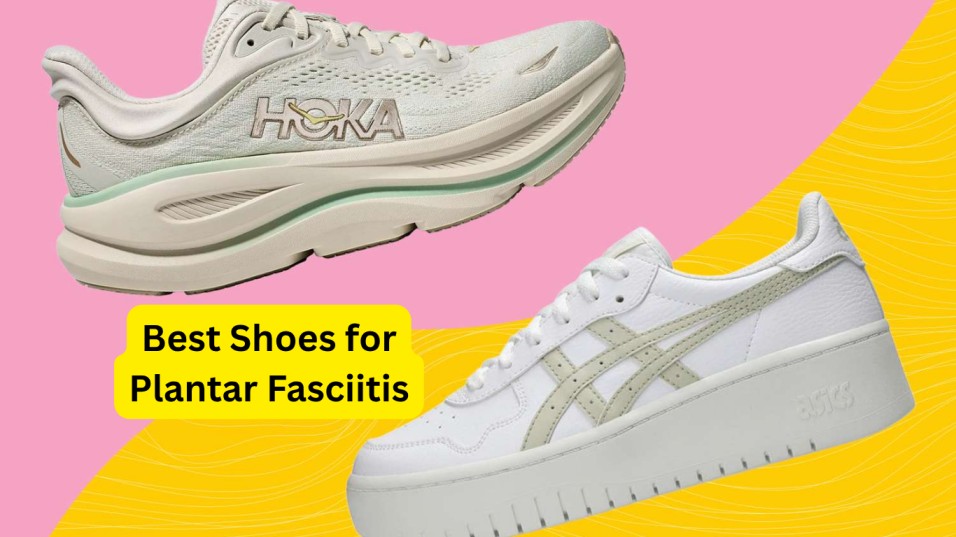

| Quick Answer: The best shoes for plantar fasciitis combine firm arch support, a deep heel cup, an 8–12mm heel-to-toe drop, and a rigid midsole that resists twisting. Podiatrist-recommended options include the Brooks Ghost 16, HOKA Bondi 9, and New Balance 990v6 for daily wear, with removable insoles so the shoe can accept a custom orthotic if one is prescribed. Replace shoes every 300–500 miles or roughly every 6 months of regular wear, since worn-out cushioning and collapsed arch support are common reasons plantar fasciitis pain persists. |
Plantar fasciitis is one of the most common causes of heel pain, and for many people, the shoes they wear every day are either part of the problem or part of the solution. The plantar fascia is a thick band of tissue that runs along the bottom of the foot, connecting the heel bone to the toes. When this tissue becomes inflamed or irritated, even short periods of standing or walking can trigger sharp, stabbing pain — often most noticeable with the first steps in the morning.
Footwear cannot cure plantar fasciitis on its own, but the right pair can meaningfully reduce strain on the fascia, support the recovery process, and prevent the condition from worsening. This guide covers what to look for in a shoe, specific podiatrist-recommended models for different needs, and how to know when it is time to see a foot specialist.
Key Points
• Look for firm arch support, a deep heel cup, and a heel-to-toe drop of 8–12mm.
• A rigid midsole that resists twisting protects the plantar fascia better than a flexible, “comfortable-feeling” sole.
• Removable insoles let you add a custom or over-the-counter orthotic if one is recommended.
• Replace supportive shoes every 300–500 miles, or about every 6 months with regular use.
• See a podiatrist if heel pain persists beyond 6 weeks despite supportive footwear and stretching.
What to Look for in a Best Shoes for Plantar Fasciitis
Shoes influence how force travels through the foot with every step. Poorly designed or worn-out footwear can increase strain on the plantar fascia, while the right structural features help distribute that load more evenly. According to podiatrists who routinely evaluate patient footwear in clinic, five features matter most.
Firm Arch Support
A shoe that firmly supports the midfoot helps prevent the arch from collapsing under load. This is especially important for people with flat feet or overpronation, since arch collapse pulls directly on the plantar fascia with every step.
Deep, Stable Heel Cup
A well-padded but structured heel cup cradles the heel fat pad and helps absorb shock at the moment of heel strike, which is typically when plantar fasciitis pain is most intense. Avoid heels that feel overly soft or mushy, since they lack the structure needed to stabilize the foot.
Rigid, Stable Midsole
The shoe should resist twisting through the middle. A simple test: try to fold the shoe in half. If it bends easily, it likely will not provide enough support for plantar fasciitis. A rigid midfoot shank limits excessive motion that can aggravate the fascia.
Moderate Heel-to-Toe Drop
Most podiatrists recommend a heel-to-toe drop between 8mm and 12mm. This modest drop slightly unloads tension on both the Achilles tendon and the plantar fascia during walking, compared to completely flat shoes.
Removable Insoles
Shoes with removable factory insoles allow a custom orthotic, prescribed by a podiatrist, or a quality over-the-counter insert to be added without crowding the foot. This feature matters more for long-term management than brand or price point.
Podiatrist-Recommended Shoes by Category
The specific shoe matters less than whether it meets the structural criteria above, but the following models are commonly recommended in clinical practice across multiple podiatry sources, organized by how the shoe is typically used.
| Category | Shoe | Best For | Key Feature |
| Daily / Walking | Brooks Ghost 16 | All-day comfort, neutral arch | Soft DNA Loft cushioning, 12mm drop |
| Daily / Walking | New Balance 990v6 | Walking, moderate support needs | Balanced cushioning and stability |
| Maximum Cushion | HOKA Bondi 9 | Heel pad atrophy, hard-floor standing | Thick midsole, rocker-bottom geometry |
| Stability / Overpronation | Brooks Adrenaline GTS 24 | Overpronators needing guided support | GuideRails technology, flexible structure |
| Orthotic-Friendly Casual | Vionic Walker Classic | Mild-to-moderate flat-foot pronation | Built-in orthotic-grade arch support |
| Work / Long Shifts | Dansko Professional | Nurses, retail, hard-floor jobs | Rocker sole, rigid shank |
| Professional Dress Alternative | Alegria TRAQ Series | Office settings requiring dress shoes | Built-in arch support, heel lift, wide widths |
For runners specifically, podiatrists most often point to the Brooks Ghost 16 or 17, the HOKA Bondi 9, and the New Balance 990v6, generally recommending at least an 8mm heel drop, a firm heel counter, and maximum cushioning to absorb repetitive impact.
Shoe Features to Avoid
Just as some features help, others tend to make plantar fasciitis worse. Most foot health specialists advise avoiding the following:
• Completely flat shoes or minimalist footwear with no structured arch support
• Worn-out shoes, even supportive models, once the midsole cushioning has compressed or the heel counter has broken down
• Flip-flops, slides, or backless sandals that offer no heel stabilization
• High heels, which shift weight forward and increase tension on the plantar fascia
• Walking barefoot on hard surfaces, which removes any cushioning or support entirely
Do You Need an Orthotic Too?
This is one of the most common questions podiatrists hear, and the answer depends on severity and foot type. For mild plantar fasciitis with a neutral arch, a quality supportive shoe alone is often sufficient, since the structural support built into a good stability or motion-control shoe provides enough arch offloading for most mild cases.
For moderate-to-severe or recurring plantar fasciitis, or for people with significant flat feet or high arches, custom functional orthotics are commonly recommended in addition to supportive footwear. In clinical experience, combining the right shoe with a custom orthotic tends to resolve plantar fasciitis symptoms faster than either approach alone.
Frequently Asked Questions
How quickly do shoes help with plantar fasciitis pain?
Many patients notice some reduction in pain within 1–2 weeks of switching to properly supportive footwear, though full resolution of plantar fasciitis typically takes 6–12 weeks when combined with stretching and other conservative care. Pain that does not improve at all after a few weeks of supportive shoes warrants a podiatry evaluation.
Are rocker-bottom shoes good for plantar fasciitis?
Yes, rocker-bottom shoes are frequently recommended for plantar fasciitis. The curved sole profile smooths the heel-to-toe transition during walking, distributing pressure more evenly across the foot and reducing strain at push-off. They are not a standalone cure, and some people need an adjustment period to get used to the rocking sensation, but they are a legitimate and commonly prescribed option.
Can the wrong shoes cause plantar fasciitis?
Worn-out, unsupportive, or poorly fitted shoes are a frequently cited contributing factor in plantar fasciitis, particularly when they lack arch support or have lost their cushioning. Footwear is rarely the sole cause, since biomechanical factors, overuse, and tight calf muscles often play a role as well, but improving footwear is consistently one of the first recommended steps in treatment.
How often should I replace shoes if I have plantar fasciitis?
Most podiatrists recommend replacing supportive shoes every 300 to 500 miles of walking or running, or roughly every 6 months with regular daily use, since the midsole cushioning and arch support break down well before the shoe looks visibly worn.
When should I see a podiatrist about heel pain?
A professional evaluation is recommended if heel pain persists beyond 6 weeks despite supportive shoes and home care, if pain is severe enough to limit walking, or if pain occurs alongside swelling, numbness, or pain that started suddenly after an injury. A podiatrist can assess foot type and gait to recommend footwear, orthotics, stretching, or other treatment tailored to the specific cause.
Conclusion
Finding the right shoes for plantar fasciitis comes down to a short list of structural features: firm arch support, a deep and stable heel cup, a rigid midsole, a moderate heel-to-toe drop, and a removable insole that can accommodate an orthotic if needed. The specific brand matters less than whether the shoe meets these criteria, and the right footwear, combined with stretching and professional guidance when symptoms persist, gives the plantar fascia the support it needs to recover.
If heel pain continues despite switching to supportive shoes, that is a signal to involve a podiatrist rather than continuing to try shoe after shoe. A short evaluation can identify the specific biomechanical cause and shorten the time it takes to get back to pain-free walking.
If your heel pain has lasted more than a few weeks, consider scheduling an evaluation with a podiatrist to identify the underlying cause and get a personalized treatment plan.