

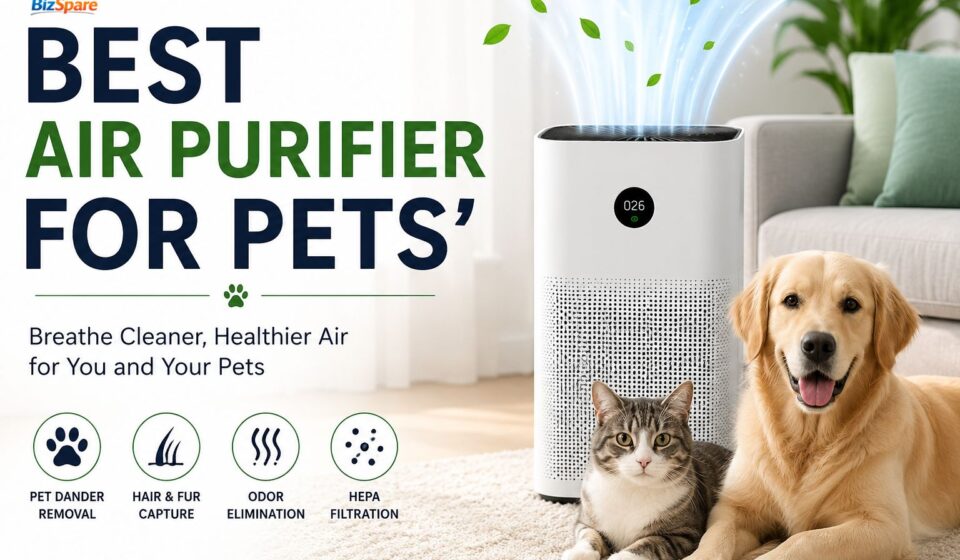

The best air purifier for pets combines a true HEPA filter for dander and hair, an activated carbon layer for odor control, and a CADR rating matched to your room size. For most households, a true HEPA unit with a pre-filter designed to trap pet hair, paired with a strong carbon filter, will outperform purifiers without dedicated pet-focused filtration.
Key Takeaways
- True HEPA filtration is the single most important feature for capturing pet dander and dust.
- Activated carbon filters are essential for neutralizing pet odors, including urine and “wet dog” smell.
- CADR (Clean Air Delivery Rate) should match or exceed your room’s square footage for effective performance.
- Pre-filters designed for pet hair extend the life of the main HEPA filter and reduce maintenance.
- Noise level matters for households with anxious pets; look for purifiers with a quiet sleep mode.
- Filter replacement cost over time is often more important than the purchase price.
- Multiple pets or multi-pet households generally need higher CADR and more frequent filter changes.
- Placement near litter boxes, pet beds, or high-traffic areas improves real-world performance.
Table of Contents
Why Pet Owners Need a Dedicated Air Purifier
Pets bring comfort and companionship, but they also introduce dander, loose hair, dust, and odor-causing particles into indoor air. Dander, in particular, is microscopic and can remain airborne for hours, settling on furniture and bedding. According to veterinary and allergy specialists, pet dander is one of the most common indoor allergens, and unlike hair, it is not always visible to the naked eye.
Standard air purifiers are not always optimized for this load. A purifier marketed for general home use may use a thinner filter that clogs quickly when faced with heavy pet hair, reducing airflow and overall effectiveness. Purifiers designed with pet owners in mind typically include reinforced pre-filters and higher-capacity HEPA media to handle this additional burden.
How Air Purifiers Tackle Pet Hair, Dander, and Odor
Air purifiers for pets typically rely on a multi-stage filtration process:
- Pre-filter: Captures larger particles like hair and fur before they reach the main filter.
- True HEPA filter: Captures at least 99.97% of particles 0.3 microns in size, including dander and dust.
- Activated carbon filter: Adsorbs odor molecules from urine, feces, and general pet smell.
- Optional ionizer or UV-C light: Some models add these for extra odor or microbial control, though independent testing on their added benefit varies by model.
Industry experts recommend prioritizing true HEPA over “HEPA-type” or “HEPA-like” filters, since only certified true HEPA filters meet the recognized particle-capture standard.
Key Features to Look For
True HEPA Filtration
This is non-negotiable for pet dander and allergens. Avoid purifiers that only advertise “HEPA-type” filtration, as these typically capture a lower percentage of particles.
Activated Carbon Layer
Look for a thick, dedicated carbon filter rather than a thin carbon-infused mesh. A denser carbon bed lasts longer and handles stronger odors more effectively.
CADR Rating
CADR measures how much filtered air a purifier delivers per minute. Most professionals recommend choosing a CADR rating sized to roughly 2/3 of your room’s square footage for adequate air changes.
Pre-Filter Designed for Pet Hair
Washable mesh pre-filters specifically designed to trap fur reduce how often you need to replace the more expensive HEPA filter.
Noise Level
Many pets are sensitive to sound. A unit with a dedicated quiet or sleep mode under roughly 30–40 decibels is preferable for shared living spaces.
Filter Replacement Cost
Based on real-world usage, ongoing filter costs often exceed the purifier’s original purchase price over a year or two, especially in multi-pet homes.
Top Picks for Pet Owners
Best Overall: High-CADR True HEPA Purifier with Pet Pre-Filter
Best suited for medium to large rooms with one or more pets. Combines a reinforced pre-filter, true HEPA stage, and substantial activated carbon for odor control.
Pros:
- Strong CADR for larger spaces
- Reinforced pre-filter handles heavy shedding
- Effective odor neutralization
Cons:
- Higher upfront cost
- Filter replacements add up over time
Best Budget Pick: Compact True HEPA Purifier
A good entry point for apartments or single-pet households with smaller rooms.
Pros:
- Affordable purchase price
- Compact footprint
- Sufficient for small to medium rooms
Cons:
- Lower CADR, not ideal for large rooms
- Carbon layer is thinner, less effective on strong odors
Best for Multi-Pet Households: High-Capacity Purifier with Heavy-Duty Filters
Designed for homes with multiple dogs or cats, or combined litter box and shedding concerns.
Pros:
- Heavy-duty filtration rated for high particle loads
- Large coverage area
- Robust odor control
Cons:
- Larger physical size
- Can be louder on higher fan speeds
Best Quiet Option: Sleep-Mode Optimized Purifier
Ideal for bedrooms shared with anxious or noise-sensitive pets.
Pros:
- Very low noise on sleep setting
- Still maintains true HEPA filtration
Cons:
- Reduced CADR on quiet settings
- May need a second unit for larger homes
[Internal Link Placeholder: How to Choose CADR for Your Room Size]
Comparison Table
| Category | Best For | Filtration Type | Noise Level | Ideal Room Size |
| Best Overall | Single or multi-pet homes | True HEPA + Carbon | Moderate | Medium–Large |
| Best Budget Pick | Apartments, single pet | True HEPA + Thin Carbon | Low–Moderate | Small–Medium |
| Best for Multi-Pet Households | Multiple dogs/cats | True HEPA + Heavy Carbon | Moderate–High | Large |
| Best Quiet Option | Bedrooms, anxious pets | True HEPA + Carbon | Very Low | Small–Medium |
Who Should Buy a Pet Air Purifier
A dedicated pet air purifier is worth the investment if you notice persistent pet odor, visible dust or hair buildup, allergy symptoms among household members, or live in a smaller, less ventilated space with one or more pets. Multi-pet households and homes with litter boxes especially benefit from stronger filtration and odor control.
Who Should Avoid Certain Models
Households without significant odor or shedding issues, or those in very small, well-ventilated spaces, may not need a high-capacity, expensive unit. Similarly, anyone on a tight budget should avoid models with costly proprietary filters that are hard to find replacements for, since long-term costs can be a poor fit for their needs.
Buying Guide
Step 1: Measure Your Room
Calculate square footage to determine the CADR you need. Larger or open-concept rooms require higher CADR ratings or multiple units.
Step 2: Identify Your Primary Concern
Decide whether shedding, dander, or odor is your biggest issue, as this affects which filter stages matter most.
Step 3: Check Filter Type and Cost
Confirm the unit uses true HEPA filtration and check the price and availability of replacement filters before purchasing.
Step 4: Consider Noise Tolerance
If your pet is noise-sensitive or the unit will run in a bedroom, prioritize a quiet sleep mode.
Step 5: Factor in Placement
Plan to place the purifier near the pet’s main area, litter box, or high-traffic zone for the best results.
[Internal Link Placeholder: Air Purifier Placement Tips]
Common Mistakes to Avoid
- Choosing a purifier based on price alone without checking CADR or filter type.
- Ignoring ongoing filter replacement costs.
- Placing the unit in a corner or behind furniture, which restricts airflow.
- Running the purifier on low settings constantly instead of matching speed to current needs.
- Forgetting to vacuum and clean pre-filters regularly, leading to clogging and reduced performance.
Expert Tips
Independent testing and real-world usage suggest running the purifier on a higher setting during peak shedding seasons, then dropping to a lower or auto setting once particle levels stabilize. Most professionals recommend cleaning or vacuuming pre-filters every one to two weeks in pet households, rather than waiting for a scheduled filter change reminder.
Maintenance Tips
- Vacuum or rinse washable pre-filters every 1–2 weeks.
- Replace true HEPA filters according to manufacturer guidance, typically every 6–12 months, sooner in heavy-shedding homes.
- Replace activated carbon filters more frequently, as they saturate faster than HEPA media.
- Keep the unit’s intake and exhaust vents free of dust buildup.
- Monitor any filter-change indicator lights and don’t delay replacements, as clogged filters reduce airflow and effectiveness.
Frequently Asked Questions
Do air purifiers really help with pet odor?
Yes, when they include a dense activated carbon filter, air purifiers can meaningfully reduce pet odor by adsorbing odor-causing molecules from the air. The effect is most noticeable when the purifier is sized correctly for the room and run consistently.
What’s the difference between HEPA and HEPA-type filters?
True HEPA filters capture at least 99.97% of particles 0.3 microns or larger, based on an established testing standard. HEPA-type or HEPA-like filters use looser standards and generally capture fewer particles, making them less effective for pet dander.
How often should I replace the filter in a pet household?
In homes with pets, filters typically need replacement more often than the standard schedule listed by manufacturers, often every 4–8 months for HEPA filters and even sooner for carbon filters, depending on shedding and odor levels.
Can one air purifier cover my whole house?
A single unit generally covers one room or open area effectively. For whole-home coverage, most professionals recommend either a central HVAC filtration upgrade or multiple portable units placed strategically.
Will an air purifier remove pet hair from the air?
A quality pre-filter combined with a true HEPA filter can capture airborne pet hair effectively, though it will not address hair already settled on furniture or floors, which still requires regular vacuuming.
Are ionizing air purifiers safe for pets?
Ionizers can produce small amounts of ozone, and high ozone exposure can be harmful to both humans and animals. If choosing an ionizing model, look for one certified to produce minimal or no ozone, or consider a standard HEPA-only purifier instead.
Do I need a bigger air purifier for multiple pets?
Yes. Multiple pets generate more dander, hair, and odor, so a higher CADR rating and more frequent filter maintenance are typically necessary compared to single-pet households.
Where should I place an air purifier in a home with pets?
Placing the unit near the pet’s primary resting area, litter box, or high-traffic zone, with at least a few inches of clearance from walls and furniture, generally produces the best results.
Can air purifiers help with pet allergies?
A true HEPA air purifier can reduce airborne dander and allergens, which may ease allergy symptoms for sensitive household members, though it should be used alongside regular cleaning rather than as a sole solution.
Is a higher price always better for pet air purifiers?
Not necessarily. Price often reflects coverage area, filter quality, and added features, but a correctly sized mid-range unit with true HEPA and strong carbon filtration can outperform an oversized or feature-heavy unit that doesn’t match your room size.
Conclusion
Choosing the best air purifier for pets comes down to matching true HEPA filtration, a substantial activated carbon layer, and an appropriate CADR rating to your specific household. Whether you have a single cat in an apartment or multiple dogs in a larger home, the right combination of filtration stages, noise level, and maintenance routine will make a noticeable difference in air quality, odor control, and shedding-related dust.
[Internal Link Placeholder: Best Air Purifier for Dander and Allergies]
Call To Action
Ready to clear the air in your pet-friendly home? Compare CADR ratings and filter types for your room size before buying, and check back for updated picks as new models are tested.